
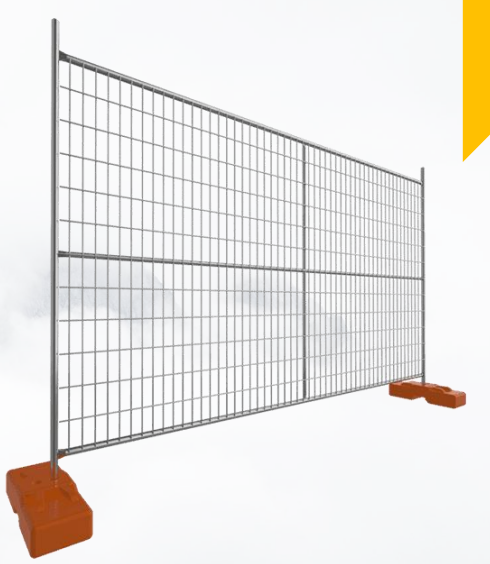
The Production Process of Chain Link Fences
Chain link fences are ubiquitous structures used in various applications, from residential properties to industrial facilities, providing security, containment, and delineation. The manufacturing process of chain link fences involves several stages of production, each contributing to the quality and durability of the final product. In this article, we'll explore the production process of chain link fences in detail.
1. Raw Material Selection:
The production process begins with the selection of high-quality raw materials. The primary materials used in chain link fence production include:
- Galvanized steel wire: Provides strength, durability, and corrosion resistance.
- PVC-coated steel wire: Offers additional protection against corrosion and enhances aesthetics.
- Aluminum wire: Lightweight and corrosion-resistant alternative for specific applications.
2. Wire Drawing:
The selected raw materials undergo wire drawing, a process that involves pulling wire rods through a series of dies to reduce their diameter and achieve the desired gauge. This process improves the tensile strength and uniformity of the wire, ensuring consistency in the final product.
3. Galvanization or Coating:
Next, the wire undergoes galvanization or coating to enhance its corrosion resistance and longevity. Galvanization involves immersing the wire in molten zinc to form a protective zinc coating, while PVC coating involves applying a layer of PVC (polyvinyl chloride) over the wire surface. Both processes provide protection against rust, corrosion, and environmental degradation.
4. Weaving:
The galvanized or coated wire is then fed into weaving machines to create the chain link mesh. The weaving process involves interlacing the wires in a zigzag pattern to form the characteristic diamond-shaped openings of the chain link fence. The spacing between the wires can be adjusted to achieve different mesh sizes and configurations, depending on the intended application.
5. Knuckling and Twisting:
After weaving, the chain link mesh undergoes knuckling and twisting processes to reinforce its edges and enhance stability. Knuckling involves bending the wire ends of the mesh to create a smooth and rounded edge, reducing the risk of injury during installation and handling. Twisting involves twisting adjacent wires together at regular intervals to form a selvage, which adds strength and rigidity to the fence panel.
6. Fabrication:
The fabricated chain link mesh is then assembled into fence panels or rolls according to customer specifications. Fence panels are typically framed with steel or aluminum posts and rails for stability and support. Alternatively, rolls of chain link mesh are packaged and shipped for onsite installation, where they can be stretched and attached to supporting structures such as posts, poles, or frames.
7. Quality Control:
Throughout the production process, rigorous quality control measures are implemented to ensure the integrity and consistency of the chain link fence products. Quality control inspections may include visual checks, dimensional measurements, and mechanical testing to verify compliance with industry standards and customer requirements.
Conclusion:
The production process of chain link fences involves several critical steps, from raw material selection to fabrication and quality control. By employing advanced manufacturing techniques and quality assurance measures, manufacturers can produce chain link fences that meet the highest standards of performance, durability, and reliability. Whether it's for residential, commercial, or industrial applications, chain link fences continue to be a popular choice for security, containment, and delineation needs.
Evolution of Modern Fencing: Transition from Primitive Wooden Fences to Contemporary Metal Fencing
Exploring the Characteristics and Applications of Anti-Climb Fences
Related Article